Distinguished
Cardiologists and Scientists Honored with 2008 International
Academy of Cardiology Awards
A
world-renowned panel of 130 cardiologists and scientists,
members of the Faculty of the International Academy of
Cardiology (IAC) announced the 2008 International Academy of
Cardiology Awards during the 14th World Congress on Heart
Disease held in Toronto, ON, Canada. Recipients include:
Professor
Harisios Boudoulas, M.D.; Professor Robert Roberts, M.D.;
Professor Philip R. Liebson, M.D.; Professor Sherif F.
Nagueh, M.D.; and Professor Udho Thadani, M.D. Three
faculty, Professor Martin Alpert, M.D.; Professor Naranjan
S. Dhalla, PhD, M.D. (Hon) and Professor John A.
Elefteriades, M.D. were also honored with the Distinguished
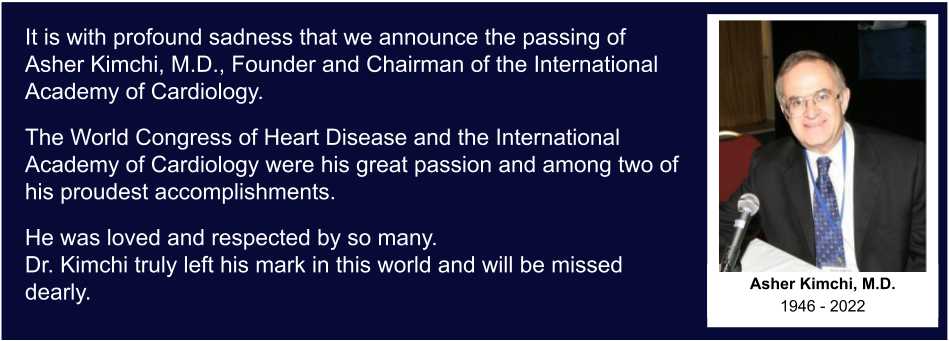
Fellowship Award. Professor Asher Kimchi, M.D., Founder and
Chairman of the IAC, said, "In the past 19 years the IAC has
grown from a prestigious academy to one of the world's
preeminent forum for top Cardiologists and Scientists. These
Professors are the best of the best. We are proud to honor
them with these well-deserved awards."
MORE»

Merck/Schering-Plough Pharmaceuticals Provides Results of
the ENHANCE Trial
Merck/Schering-Plough
Pharmaceuticals announced the primary endpoint and other
results of the ENHANCE (Effect of Combination Ezetimibe and
High-Dose Simvastatin vs. Simvastatin Alone on the
Atherosclerotic Process in Patients with Heterozygous
Familial Hypercholesterolemia) trial. ENHANCE was a
surrogate endpoint trial conducted in 720 patients with
Heterozygous Familial Hypercholesterolemia (HeFH). The
primary endpoint was the mean change in the intima-media
thickness (IMT) measured at three sites in the carotid
arteries (the right and left common carotid, internal
carotid and carotid bulb) between patients treated with
ezetimibe/simvastatin 10/80 mg versus patients treated with
simvastatin 80 mg alone over a two year period. There was no
statistically significant difference between treatment
groups on the primary endpoint. The change from baseline in
the mean carotid IMT was 0.0111 mm for the ezetimibe/simvastatin
10/80 mg group versus 0.0058 mm for the simvastatin 80 mg
group (p =0.29). At baseline, the mean carotid IMT
measurement for ezetimibe/simvastatin was 0.68 mm and for
simvastatin 80 mg was 0.69 mm. There was also no
statistically significant difference between the treatment
groups for each of the components of the primary endpoint,
including the common carotid artery. Key secondary imaging
endpoints showed no statistical difference between treatment
groups.
MORE»

Blocking
Early Steps in Platelet Aggregation Reduces Stroke Infarct
Size Without Increasing Intracerebral Hemorrhage (ICH)
Ischemic
stroke is the third leading cause of death and permanent
disability in industrialized countries. Currently, the
anticoagulant therapies available to treat ischemic stroke
offer moderate benefit on stroke progression and recurrence,
but this is outweighed by a significant increase in the rate
of ICH. During ischemia, platelets can adhere to hypoxic
endothelial cells by binding of their glycoprotein (GP) Ib
receptor to von Willebrand factor (vWF) on the endothelial
surface. Additionally, subendothelial matrix proteins are
exposed, allowing firm attachment of platelets to the vessel
by binding of collagens to their GPVI receptor. These
processes lead to activation of platelet GPIIb/IIIa and
platelet aggregation. Christoph Kleinschnitz, MD et al from
the University of Würzburg in Würzburg, Germany tested the
hypothesis that blocking platelet aggregation and activation
at various steps in these pathways may reduce infarct size
following ischemic stroke. Their results, published in the
May 1, 2007 issue of Circulation, showed that
targeting platelet GPIb or GPVI receptors protects mice from
ischemic brain injury in an experimental stroke model
without increasing bleeding complications. In contrast,
blockade of the final common pathway of platelet aggregation
with anti-GPIIb/IIIa antibodies had no positive effect on
stroke outcome and dose-dependently raised the incidence of
ICH and mortality.
MORE»

Intravenous Hydrocortisone Reduces the Incidence of Atrial
Fibrillation (AF) after Cardiac Surgery
The
incidence of AF has been reported to be 20-40% after
coronary bypass graft (CABG) surgery, and is even higher
after valve and combined valve and bypass surgery. A
potential mechanism for the AF is an exaggerated
inflammatory response, demonstrated by increased levels of
complement, C-reactive protein complex, and number of white
blood cells in patients who develop AF. Jari Halonen, MD et
al from Kuopio University Hospital in Kuopio, Finland
investigated whether intravenous corticosteroids
administered after cardiac surgery prevents AF after cardiac
surgery. Their results, published in the April 11, 2007
issue of the Journal of the American Medical Association
concluded that intravenous hydrocortisone reduced the
incidence of AF after cardiac surgery.
MORE»

Elastin
Stabilization is an Effective and Safe Treatment for
Abdominal Aortic Aneurysms (AAAs) in a Rat Model
Currently,
a pharmacologic treatment for AAAs does not exist. Present
treatment options include endovascular stents or open
surgery, but these procedures are not appropriate for all
patients and there are risks involved. One of the
characteristic features of AAAs is matrix metalloproteinase
(MMP) mediated loss of elastin. However, elastin can be
rendered resistant to enzymatic degradation when bound by
tannins. Jason C. Isenburg, PhD and Dan T. Simonescu, PhD et
al from the Department of Bioengineering at Clemson
University in Clemson, SC explored the effects of
polyphenolic tannins, specifically petagalloly glucose (PGG),
on AAA development. The results of their study, published in
the April 3, 2007 issue of Circulation, concluded
that acute localized periadventitial delivery of
noncytotoxic concentrations of PGG inhibits elastin
degradation, attenuates aneurysmal diameter expansion, and
hinders development of AAA in an established animal model.
MORE»

Pulse Pressure
is a Risk Factor for New-Onset Atrial Fibrillation (AF)
Atrial
fibrillation is associated with an increased risk of
mortality and stroke, and every one in four people will
develop AF at some point in their lifetime. Already
recognized clinical risk factors for AF include advancing
age, increased systolic blood pressure, diabetes,
hypertension, heart failure, valvular disease, myocardial
infarction, and obesity. Echocardiographic risk factors for
AF include left atrial enlargement, increased left
ventricular wall thickness, and impaired left ventricular
systolic function. Gary F. Mitchell, MD et al from the
Cardiovascular Engineering Inc. in Waltham, MA investigated
whether pulse pressure, a reflection of aortic stiffness,
could be a potentially easily modifiable risk factor for AF.
Their study, published in the February 21, 2007 issue of
The Journal of the American Medical Association, found
that pulse pressure is in fact an important risk factor for
incident AF in a community-based sample.
MORE»

Intensive Treatment with Atorvastatin in Patients with
Stable Coronary Artery Disease Significantly Reduces
Hospitalizations for Heart Failure (HF)
Statins
are known to reduce the rate of major cardiovascular events
through their lipid lowering effects, but their potential
benefit as treatment for HF is largely unexplored. Kiran K.
Khush et al from University of California, San Francisco
School of Medicine compared the effects of two doses of the
same statin formulation to determine their impact on the
incidence of hospitalization for HF among the two treatment
arms. This study, which was published in the February 6,
2007 issue of Circulation, found that intensive
treatment with atorvastatin in patients with stable coronary
artery disease significantly reduces subsequent
hospitalizations for HF compared with low-dose therapy. This
benefit was most pronounced in patients with a history of HF.
MORE»

Alleles for
Long –QT Syndrome are More Often Transmitted to Daughters
Than to Sons
Congenital
long-QT syndrome is a rare cardiac disorder in which
patients present with a prolongation of the QT interval of
the heart rate. The patients are at risk for ventricular
arrhythmias, which could lead to syncope and death.
Inheritance of long-QT syndrome is autosomal dominant but
can also be recessive. Mutations in the potassium-channel
genes, KCNQ1 and KCNH2, cause type 1 and type 2 forms of the
disease, respectively. A female predominance has often
been observed and has been attributed to an increased
susceptibility to cardiac arrhythmias. Pascale Guicheney,
PhD et al from the INSERM in Paris, France investigated the
possibility of an unbalanced transmission of the deleterious
trait to women. Their results showed a skewed segregation of
the mutations from mothers to their daughters and explained
how it contributes to the female predominance in long-QT
syndrome. The study was published in the December 28, 2006
issue of The
New
England Journal of Medicine.
MORE»

Decontamination of Nasopharynx and Oropharynx with
Chlorhexidine Gluconate Appears to Reduce Nosocomial
Infection After Cardiac Surgery
Nosocomial
infections after open-heart surgery are recognized as an
important cause of complications and mortality. Patrique
Segers, MD et al from the University of Amsterdam set out to
determine the efficacy of perioperative decontamination of
the nasopharynx and oropharynx with chlorhexidine gluconate
for reduction of nosocomial infection after cardiac surgery.
Their study, published in the November 22/29 issue of the
Journal of the American Medical Association found that
decontamination with chlorhexidine gluconate appears to be
an effective method to reduce nosocomial infection after
cardiac surgery.
MORE»

Percutaneous Coronary Intervention Did Not Reduce the
Occurrence of Death, Reinfarction, or Heart
Failure in Patients with Occlusion of the
Infarct-Related Artery 3 to 28 Days after Myocardial
Infarction
Current
treatment of acute myocardial infarction (MI) with
ST-segment elevation includes early reperfusion with primary
percutaneous coronary intervention (PCI. For patients with
persistent total occlusion of the infarct-related artery who
have been identified after the currently accepted period
during which reperfusion is administered, the best strategy
for care has been unclear until now. Judith Hochman
M.D., et al from the New York University School of Medicine,
conducted a 4 year study showing that PCI did not reduce the
occurrence of death, reinfarction or heart failure in
patients with occlusion of the infarct-related artery 3 to
28 days after myocardial infarction. The article was
published in the November 14, 2006 issue of The New England
Journal of Medicine.
MORE»

Radiofrequency Catheter Ablation Should Be Considered a
First-Line Therapy After the First Episode of Symptomatic
Atrial Flutter
Until
now, there have been no studies comparing amiodarone therapy
and radiofrequency catheter ablation (RFA) for patients who
have had one episode of atrial flutter (AFL). Antoine Da
Costa, MD, PhD et al from the University Jean Monnet in
Saint-Etienne, France did a study comparing the efficacy and
safety of first-line RFA versus AFL therapy. The study found
that RFA should be considered a first-line therapy even
after the first episode of symptomatic AFL due to better
long-term success rate, the same risk of subsequent AF and
fewer secondary effects. The study was published in the
October 17, 2006 issue of Circulation.
MORE»

Intracoronary Injection of Mononuclear Bone Marrow Cells in
Acute Myocardial Infarction Found No Effects on Global Left
Ventricular Function
The
net loss of cardiomyocytes during myocardial infarction is a
key factor in the impairment of cardiac-pump function. The
bone marrow contains stem cells that have shown promising
results in solid-organ repair and regeneration. Ketil
Lunde M.D. et al from the Rikshospitalet University Hospital
in Oslo, Norway designed a randomized, controlled trial to
investigate the effects of intracoronary injection of
autologous cells from bone marrow (BMC) in the acute phase
of myocardial infarction. They investigated whether there
was any improvement in left ventricular function after the
treatment. The study, published in the September 21, 2006
issue of The New England Journal of Medicine, found no
effects of intracoronary injection of autologous mononuclear
BMC on global left ventricular function.
MORE»

Sirolimus-Eluting Stents Reduce the Rate of Target-Vessel
Revascularization Among Patients with Acute Myocardial
Infarction
While
it has been known that Sirolimus-eluting stents reduce the
rates of restenosis and reintervention, the safety and
efficacy of such stents in primary percutaneous coronary
intervention (PCI) for acute myocardial infarction was not
studied as extensively. Christian Spaulding, M.D. et al from
the Cochin Hospital in Paris, France performed a
single-blind, multicenter, randomized trial to compare
sirolimus-eluting stents with uncoated stents in primary PCI
for patients with acute myocardial infarction with
ST-segment elevation. Their study, published in the
September 14, 2006 issue of The New England Journal of
Medicine, found among selected patients with acute
myocardial infarction, the use of sirolimus-eluting stents
significantly reduced the rate of target-vessel
revascularization at 1 year.
MORE»

Daptomycin
may be an Alternative to Standard Therapy for Bacteremia and
Endocarditis Caused by
Staphylococcus aureus
Staphylococcus
Aureus is a leading cause of bacteremia and endocarditis.
Gentamicin plus penicillin or vancomycin is standard therapy
for S. Aureus bacteremia. Vancomycin is the standard therapy
for blood-stream infections attributable to methicillin-resistant
S. aureus (MRSA). The standard therapy has been associated
with suboptimal outcomes. Vance G. Fowler, Jr., MD, MHS, et
al from Duke University Medical Center set out to establish
whether daptomycin is an effective and safe treatment for S.
aureus bacteremia and endocarditis. The study, published in
the August 17, 2006 issue of The New England Journal of
Medicine found that Daptomycin (6 mg per kilogram daily)
is not inferior to standard therapy for S. aureus bacteremia
and right-sided endocarditis.
MORE»

Mediterranean Diets Supplemented With Olive Oil or Nuts Have
Beneficial Effects on Cardiovascular Risk Factors
The
low incidence of coronary artery disease in Mediterranean
countries has been attributed to the dietary habits of the
people of that region. A multi-center, randomized study by
Ramon Estruch, MD, PhD et al from the Hospital Clinic in
Spain compared the short-term effects of two Mediterranean
diets versus those of a low-fat diet on intermediate markers
of cardiovascular risk. The findings, published in the July
4, 2006 issue of Annals of Internal Medicine, found that
compared to low-fat diets, Mediterranean diets supplemented
with olive oil or nuts have beneficial effects on
cardiovascular risk factors.
MORE»

N-Acetylcysteine may Prevent
Contrast-Medium Induced Nephropathy in Patients Treated With
Primary Angioplasty
Patients
with acute myocardial infarction undergoing primary
angioplasty are at high risk for contrast-medium-induced
nephropathy. Giancarlo Marenzi M.D. et al from the Institute
of Cardiology at the University of Milan investigated the
use of N-acetylcysteine for the prevention of
contrast-medium-induced nephropathy in patients undergoing
primary angioplasty. The study, published in the June
29,2006 issue of The New England Journal of Medicine,
concluded that intravenous and oral N-acetylcysteine may
prevent contrast-medium-induced nephropathy with a
dose-dependent effect in patients treated with primary
angioplasty and may improve hospital outcome.
MORE»

Mutations in the Connexin 40 Gene, GJA5,
Predisposes Patients to Idiopathic Atrial Fibrillation
Atrial
Fibrillation is the most common type of cardiac arrhythmia
characterized by erratic electrical activation of the atrial
myocardium, resulting in loss of effective contractility and
an increase in clot formation. Michael H. Gollob et al from
the University of Ottawa Heart Institute studied the genetic
basis of atrial fibrillation as it relates to mutations in
the connexin 40 gene, GJA5. Their results, published in the
June 22, 2006 issue of The New England Journal of Medicine,
found that mutations in GJA5 may predispose patients to
idiopathic atrial fibrillation by impairing gap-junction
assembly or electrical coupling.
MORE»

In Pediatric
Patients With Cardiac Arrest, Survival Outcomes Were Higher
Among Patients in Whom Ventricular Fibrillation or
Tachycardia was Present Initially Than Among Those in Whom
it Developed Subsequently
In
children, cardiac
arrests are typically presented secondary to a progressive
respiratory failure or shock, rather than as a primary
arrhythmogenic event as seen in adults.
Ventricular fibrillation or tachycardia can also occur
during cardiopulmonary resuscitation (CPR) for asystole or
pulseless electrical activity as a reperfusion
arrhythmia. A study by Robert A. Berg M.D et al, from
the Steele Children’s Research Center in Arizona, showed
that a presentation of ventricular fibrillation or
tachycardia at the beginning of cardiac arrest results
in a better survival outcome than if the ventricular
fibrillation presented subsequently during CPR. The
study was published in the June 1, 2006 issue of The New
England Journal of Medicine.
MORE»

High-Dose Atorvastatin Reduces the Overall Incidence of
Stroke or Transient Ischemic Attack
It
has become evident that patients who take statins have a
decreased incidence of stroke and cardiovascular risks. It
has been, however, unknown whether patients with previous
strokes or transient ischemic attacks (TIA) would benefit
from taking statins. A study led by The Stroke Prevention
by Aggressive Reduction in Cholesterol Levels (SPARCL)
Investigators showed that in patients with recent stroke
or TIA and without known coronary heart disease, 80 mg of
atorvastatin per day reduced the overall incidence of
strokes and of cardiovascular events. This study was
published in the August 10, 2006 issue of The New England
Journal of Medicine.
MORE»